


If you are facing second-degree trespass in NC, here is the plain answer. Second-degree trespass in North Carolina is usually a Class 3 misdemeanor, the lowest level of criminal charge in the state, and for most people with no record, it means a fine and court costs rather than jail. It applies when you enter or stay on someone else’s property after being told to leave or after ignoring a posted notice.
Maybe you did not think a parking lot, a store, or a piece of land was off limits, and now you have a citation in your hand. We help people in Wake County work through charges like this, and the first step is understanding exactly what the state has to prove.
Here is a short checklist you can use today.
- Read your citation and note the exact subsection, the court date, and the county.
- Write down who told you to leave, when, and whether any signs were posted.
- Take photos of the location and any postings if you can do so lawfully.
- Do not contact the property owner or the person who reported you.
- Talk with a defense lawyer before you decide how to plead.
What Second Degree Trespass Means in North Carolina
Second degree trespass is defined in North Carolina’s second degree trespass statute. The law covers three situations, and the version you are charged with controls how serious the case is.
According to the North Carolina General Assembly, you commit second degree trespass if, without authorization, you enter or remain on property in any of these ways.
- You stay on premises after the owner, a person in charge, a lawful occupant, or another authorized person tells you not to enter or remain.
- You enter premises that are posted, in a way reasonably likely to be seen, with notice not to enter.
- You enter the curtilage of someone’s dwelling between midnight and 6:00 in the morning.
The Notice Requirement
Most second-degree trespass charges turn on notice. The state usually must show that you were told to stay away or that a sign gave you fair warning.
If no one told you to leave and nothing was posted where you could see it, the case may be weaker than it looks. That single question often decides the outcome.
The earlier we look at your case, the more room there is to shape the outcome. Contact us before your court date so nothing slips by.
Call or text us at (919) 457-1954 or visit our contact page to schedule a consultation. We are ready to listen and help you move forward.
The Posted Property Version
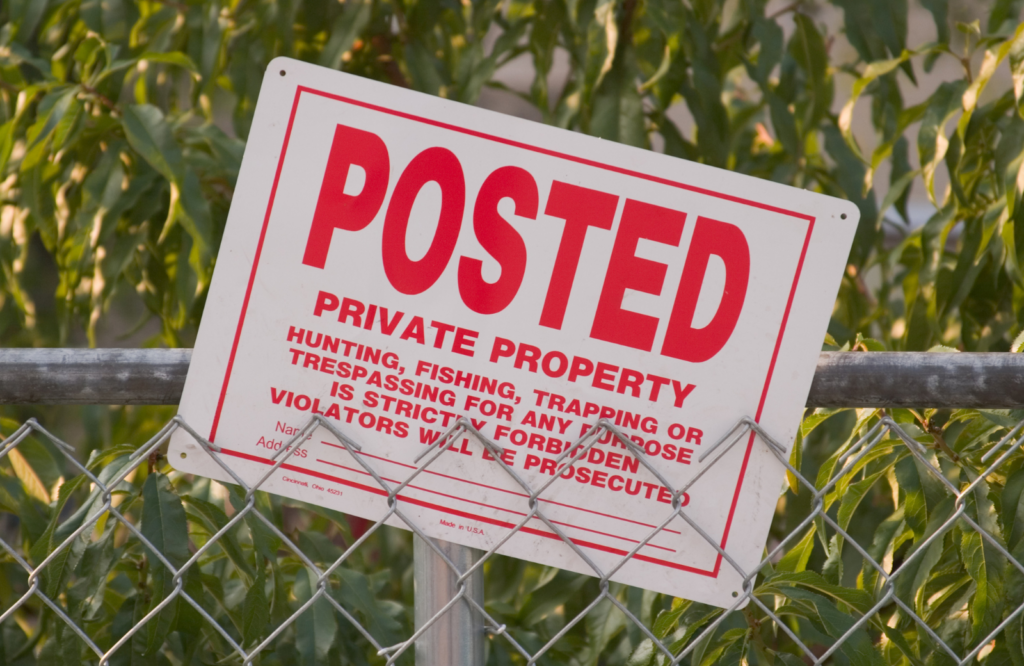
Posted property is the second path to a charge. The notice has to be placed in a way that a reasonable person would likely notice, not hidden or unreadable.
We look closely at where signs were located and whether they were visible. A sign facing the wrong way or buried in brush may not meet the standard.
The Overnight Curtilage Version
North Carolina added a third version in 2023 that focuses on the curtilage of a dwelling. Curtilage is the area immediately around a home, such as a porch or a fenced yard.
Entering that space between midnight and 6:00 in the morning without authorization is treated more seriously. This version is a Class 2 misdemeanor rather than a Class 3.
Penalties for Second Degree Trespass in NC
The penalty depends on which version of the statute applies. Both are misdemeanors, and neither is a felony, but the exposure differs.
The Class 3 Misdemeanor Penalty
The notice version and the posted version are Class 3 misdemeanors. A Class 3 misdemeanor carries up to 20 days and a fine of up to $200, and for someone with no prior record, the sentence is usually a fine and costs with no jail.
This is the lowest misdemeanor level in North Carolina. Even so, it is still a criminal charge that can appear on a background check.
The Class 2 Misdemeanor Penalty
The overnight curtilage version is a Class 2 misdemeanor. That level carries up to 60 days and a fine of up to $1,000 in the court’s discretion.
The higher class reflects the added concern about someone near a home at night. If this is your charge, the stakes are higher.
Collateral Costs
The fine is rarely the whole story. A conviction can affect housing applications, job searches, and background checks well after the case ends.
That is why many people fight even a low level trespass charge. Keeping your record clean often matters more than the fine itself.
First Degree vs Second Degree Trespass
People often mix up the two levels of trespass. The difference comes down to how secure the property was and what you entered.
How First Degree Trespass Differs
First degree trespass, under a separate North Carolina statute, applies when you enter premises that are enclosed or secured to keep out intruders, or when you enter a building of another. You can review the exact language from the North Carolina General Assembly.
Basic first degree trespass is a Class 2 misdemeanor, and it can rise to a felony on certain protected sites like utility or energy facilities. Second degree trespass involves less secured property, which is why it usually carries a lower charge.
Trespass and Property Crime Data
Trespass is grouped with property offenses in national crime data. The Bureau of Justice Statistics counts trespassing among crimes against households, alongside burglary and motor vehicle theft.
That framing matters because trespass charges often begin as disputes over property and access, not violence. Understanding that context can shape how a case is defended.
Trespass Charge Comparison
| Charge | Typical Situation | Offense Class | Maximum Jail Exposure |
| Second degree trespass, notice or posted | Staying after being told to leave or ignoring a sign | Class 3 misdemeanor | Up to 20 days |
| Second degree trespass, overnight curtilage | Near a home between midnight and 6 a.m. | Class 2 misdemeanor | Up to 60 days |
| First degree trespass, basic | Enclosed, secured premises or a building | Class 2 misdemeanor | Up to 60 days |
Common Defenses to a Trespass Charge

A trespass charge is not the end of the story. There are several angles we look at, and any one of them can change the result.
You Had Authorization
If you had permission to be there, the charge falls apart. Permission can come from an owner, a tenant, or another person with authority over the space.
Sometimes the person who reported you did not actually control the property. That detail can matter a great deal.
You Were Never Given Notice
The state usually must prove notice. If no one told you to leave and no visible sign was posted, the core of the case is missing.
We test how and when any warning was given. Vague or after the fact claims often do not hold up.
Mistake or Misunderstanding
- You reasonably believed the area was open to the public.
- Property lines were unclear or unmarked.
- You left promptly once you understood you were not welcome.
- The signage was missing, hidden, or unreadable.
Weak or Missing Evidence
Trespass cases often rest on one witness and a memory. When the details do not line up, the state may struggle to prove the charge.
You have the right to make the state meet its burden. That right is often where a good outcome begins.
Where Second Degree Trespass Charges Commonly Come Up
Trespass charges often grow out of ordinary places and everyday disputes. Seeing the common settings helps you understand how these cases begin.
Stores and Businesses
Many charges start when someone is asked to leave a store and does not go quickly enough, or returns after being banned. A prior ban from a business can turn a later visit into a charge.
These situations often hinge on whether you knew you were not welcome. That knowledge is exactly what the state must prove.
Apartments and Rental Property
Disputes at apartment complexes are another common source. A guest who is told to leave, or a former tenant who returns, can face a trespass charge.
Questions of who had authority to allow or deny access come up often here. Those questions can shape the defense.
Open Land and Parking Areas
Charges also arise on open land, lots, and posted property. Unclear boundaries and missing signs make these cases especially fact driven.
Where a sign sat and whether you could see it can decide the case. We examine these details closely.
How Notice Is Given Under the Law
Notice is at the heart of most second degree trespass charges. The way notice was given, or not given, often controls the result.
Verbal Notice
An owner, occupant, or authorized person can tell you not to enter or to leave. If that instruction was never clearly given, the notice element may be missing.
Who spoke and what they said matters. A vague comment is not the same as a clear instruction.
Posted Signs
A posting must be placed where a reasonable person would likely notice it. Signs that are hidden, faded, or turned away may not satisfy the law.
We look at the exact placement and condition of any sign. Small facts can make a large difference.
Earlier Bans and Warnings
Sometimes notice comes from an earlier ban rather than a warning that day. Whether that ban was valid and clearly communicated becomes the key question.
We trace how and when any ban was issued. That history can strengthen your position.
What to Expect With a Trespass Case
Even a low-level charge can feel overwhelming when you have never been to criminal court. Knowing the path ahead makes it less intimidating.
The District Court Process

Second-degree trespass is handled in district court in the county where it happened. Your first setting is usually administrative, where the case is scheduled rather than resolved.
From there, we can review the evidence, talk with the prosecutor, and decide whether to seek a dismissal, negotiate, or set the case for trial. This process takes time, and that time can help you.
Keeping It Off Your Record
For many first-time charges, the goal is a dismissal or a resolution that leaves no conviction. When a conviction is avoided, you may later be able to clear the record entirely.
Protecting your record is often the real prize. It shapes your options for years after the case closes.
Talking With a Lawyer Early
The sooner you get advice, the more options tend to stay open. Early review lets us spot missing notice or a question of authorization before your court date.
A short conversation can change how the whole case is handled. It costs nothing to understand where you stand right now.
Frequently Asked Questions
Is second degree trespass a felony in North Carolina?
No. Second degree trespass is a misdemeanor. The notice and posted versions are Class 3 misdemeanors, and the overnight curtilage version is a Class 2 misdemeanor.
Will I go to jail for second degree trespass?
Jail is unlikely for a first Class 3 offense, which usually results in a fine and court costs. The maximum exposure is up to 20 days for the Class 3 version and up to 60 days for the Class 2 version, but active time is not the common outcome for people with no record.
What is the difference between first and second degree trespass?
First degree trespass involves entering secured or enclosed premises or a building, and it is a Class 2 misdemeanor or higher. Second degree trespass involves less secured property after notice or a posting, and it is usually a Class 3 misdemeanor.
Can a second degree trespass charge be dismissed?
Yes, dismissal is possible, especially with negotiation or when notice is missing or authorization existed. The result depends on the facts and the county, so we review each case individually.
Does a trespass conviction show up on a background check?
Yes, a conviction can appear on a criminal background check even at the Class 3 level. That is one reason people often choose to fight the charge rather than simply plead guilty.
What should I do if I was charged after being asked to leave a store?
Note who asked you to leave and whether you left promptly once you understood. Then talk with a lawyer, because the details of the notice often decide whether the state can prove its case.
How We Help With Trespass Charges
You are not a bad person because you got a citation, and you deserve straight answers. We focus on the facts and on what comes next for you.
A Practical Look at Your Case
We review the notice, the location, and the evidence, then explain the realistic paths forward. Our aim is to protect your record and reduce the stress this puts on your life.
We help people charged with second-degree trespass and other misdemeanors in Wake County. If your case is in Wake County, we can talk about your options.
Clear, Direct Guidance
We keep things simple and human. You get honest information about your charge, your court date, and the choices in front of you.
You can learn more on our Raleigh criminal defense page and our criminal defense attorney page. Both explain how we approach cases like yours.
Reach Out Today
The earlier we look at your case, the more room there is to shape the outcome. Contact us before your court date so nothing slips by.
Call or text us at (919) 457-1954 or visit our contact page to schedule a consultation. We are ready to listen and help you move forward.
This blog is general information about North Carolina law and is not legal advice. Reading it does not create an attorney client relationship. For guidance about your situation, speak with a licensed North Carolina attorney.
